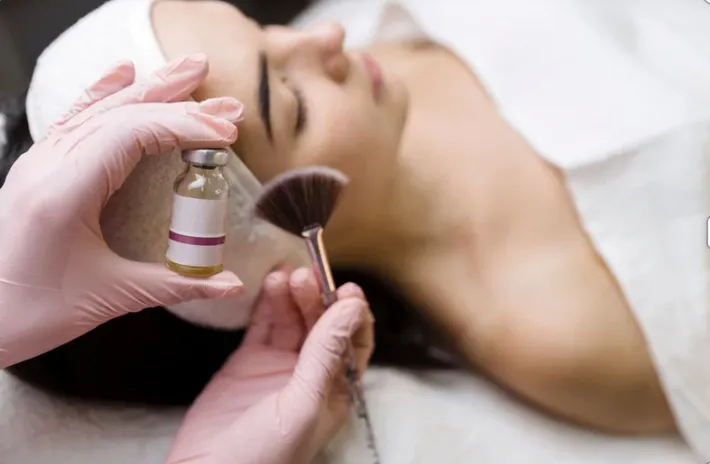
Exosomes in Skincare
Lindsay Rose Beauty Blog
Glow from the inside out... skincare, wellness, and business inspiration
Home | Skincare | Wellness | Business | About | Contact
Exosomes in Skincare: The Regenerative Breakthrough Transforming Anti-Aging
(What You Need to Know)
The science-backed innovation that's changing how we approach skin rejuvenation
The Skincare Ingredient Everyone's Talking About
If you've been paying attention to advanced skincare lately, you've probably heard about exosomes.
Beauty influencers are raving. Dermatologists are intrigued. Korean skincare brands are leading the charge. And the clinical results? They're stunning. Influencers on social media are making comments about them; some are loving it, and some are sharing wrong info.
But what ARE exosomes? Are they just another overhyped trend, or is there real science behind the buzz?
As a licensed esthetician with a degree in Biology, I am very interested in the research of all things for the skin, but definitely exosomes, studying the clinical data, and testing professional-grade formulations. And here's what I've learned: Exosomes represent a genuine breakthrough in regenerative skincare ... but not all exosome products are created equal.
Let me break down exactly what exosomes are, how they work, why they're different from everything else you've tried, and what you need to know before investing in this technology. I also reference an article from one of my main distributors for my practice and where I purchase my exosomes. This article helped to comfort my decision to bring them in because I too had see influencer say things online aobut them and they have great pull, but ask your esthetician your licensed professional if what you are hearing are correct!
What Are Exosomes? (The Biology Lesson You Actually Need)
The Simple Explanation
Exosomes are tiny extracellular vesicles ... essentially microscopic "packages" that cells release to communicate with other cells.
Think of them as biological text messages. Your cells constantly send these tiny messengers carrying instructions, nutrients, proteins, and genetic information to other cells throughout your body. Cool right?
The Science
Exosomes are 30-150 nanometers in size (about 1/1,700 the size of a pore), making them small enough to penetrate deeply into skin without needles or devices.
They contain:
Proteins – Including growth factors that stimulate collagen and elastin
Lipids – That protect and deliver the payload
RNA and microRNA – Genetic instructions that tell cells how to behave
Signaling molecules – That trigger specific cellular responses
When exosomes encounter skin cells, they don't just sit on the surface ... they're absorbed and deliver their biological "instructions" directly into the cell, triggering regeneration, repair, and rejuvenation.
Why This Matters for Your Skin
Most skincare ingredients work on the surface or stimulate one specific pathway (like retinol speeding up cell turnover, or vitamin C providing antioxidants).
Exosomes work differently. They deliver comprehensive cellular instructions that trigger:
Collagen and elastin production
Tissue repair and regeneration
Inflammation reduction
Improved cell communication
Enhanced wound healing
Increased hydration and barrier function
It's not about adding something TO your skin ... it's about changing how your skin cells function at the deepest level.
Where Do Skincare Exosomes Come From?
This is where quality matters enormously. Not all exosomes are the same.
Umbilical Cord-Derived Exosomes (The Gold Standard)
The most effective exosomes in skincare come from human umbilical cord blood stem cells ... specifically mesenchymal stem cells (MSCs).
Why umbilical cord?
Ethically sourced from clinical-grade donations
Contains the youngest, most potent cellular material
Rich in growth factors and regenerative proteins
Highly biocompatible with human skin
Proven in clinical studies for tissue regeneration
These exosomes are:
Non-viable (not live cells—completely safe)
Acellular (purified, no cellular material)
Medically screened (rigorous safety protocols)
Stable (properly processed and preserved)
Plant-Derived "Exosome-Like" Vesicles
Some brands use plant-derived extracellular vesicles (from grapes, ginger, etc.) and call them "plant exosomes."
Technically, plants don't produce mammalian exosomes, but they do secrete similar vesicles with antioxidant and anti-inflammatory benefits.
The truth: Plant EVs can support skin health, but they don't have the same regenerative potential as human umbilical-derived exosomes. They're complementary ingredients, not replacements.
What I use: Professional formulations that prioritize umbilical cord-derived exosomes as the hero ingredient, sometimes enhanced with plant-derived vesicles for additional antioxidant support.
The Science Behind Exosomes: What Clinical Studies Show
Let me address the skepticism head-on: Yes, there is peer-reviewed research supporting exosomes in skincare.
Human Studies and Clinical Evidence
Contrary to viral claims that "there are no human studies," multiple peer-reviewed studies using human subjects, human skin explants, and human cell cultures demonstrate exosome effectiveness:
Study 1: IRB-approved clinical study on 22 women using topical exosome lotion showed improved skin barrier function and safety (Frontiers in Bioengineering & Biotechnology, 2022)
Study 2: Clinical trial for melasma and skin rejuvenation using umbilical cord-derived exosomes on live human subjects (ClinicalTrials.gov: NCT06677931)
Study 3: Ex vivo study on human skin explants showing increased collagen and elastin production (PubMed)
Study 4: In vitro study using human foreskin fibroblasts demonstrated increased extracellular matrix proteins, including collagen, elastin, and fibronectin (Springer, 2024)
Study 5: Human study using umbilical cord blood stem cell-derived conditioned media showed visible improvements in dermal density and wrinkle reduction (PMC Article: PMC6205340)
What the Research Shows
Human umbilical cord MSC-derived exosomes have been shown to:
Significantly enhance collagen and elastin expression
Increase fibroblast proliferation (the cells that produce collagen)
Accelerate skin wound healing in both mouse models and human cell cultures
Improve skin barrier function and hydration
Reduce inflammation and support tissue regeneration
Deliver visible anti-wrinkle and anti-aging benefits
This isn't speculative science; it's peer-reviewed, published research on human tissue and human subjects.
Debunking the Exosome Myths
There's been confusion and misinformation circulating online about exosomes. Let me address the common concerns:
Myth 1: "Exosomes can't be shelf-stable without -80°C freezing"
Truth: Injectable medical-grade exosomes require cryopreservation because they contain live biological material.
But cosmetic-grade, non-viable, purified exosomes undergo freeze-drying (lyophilization) and are reconstituted into stabilized liquid formulations using cosmetic-safe carriers (butylene glycol, amino acid buffers, medical-grade preservatives).
Peer-reviewed studies confirm freeze-dried exosomes retain bioactivity at room temperature or under refrigeration when properly stabilized (PMC11565256; PubMed 30316791).
Myth 2: "Exosomes are illegal or dangerous"
Truth: Topical exosomes derived from ethically sourced, non-viable, acellular umbilical cord material are:
Regulated under cosmetic frameworks
Clinically tested for safety
Used in Korea and internationally without safety concerns
NOT the same as injectable stem cell therapies (which are more strictly regulated)
Myth 3: "There's no evidence they work"
Truth: As outlined above, there are multiple peer-reviewed human studies, clinical trials, and in vitro research demonstrating efficacy. The field is emerging, but the science is solid.
Myth 4: "Plant exosomes don't exist"
Truth: Plants don't produce mammalian exosomes, but they do secrete extracellular vesicles with antioxidant and anti-inflammatory properties. Research shows grape-derived and ginger-derived EVs can support skin health, but they're not a replacement for umbilical-derived exosomes.
For more detailed scientific information, I highly recommend reading this comprehensive article from AO Medical: Let's Talk About Exosomes - Exotran by Trandmi
What Makes Professional Exosome Products Different
Not all exosome products deliver results. Here's what separates professional-grade from marketing hype:
Quality Indicators:
✅ Umbilical cord-derived as the hero ingredient (not just plant-based)
✅ Clinical-grade sourcing and processing (verified bio labs)
✅ Proper stabilization methods (freeze-dried and reconstituted professionally)
✅ High bioactive concentration (not diluted with fillers)
✅ Transparent ingredient lists (you know exactly what you're getting)
✅ Additional synergistic actives (peptides, PDRN, growth factors)
✅ Professional-strength formulation (not retail-diluted versions)
What I Look For:
When selecting exosome products for my clients, I choose formulations that:
Use patented umbilical cord stem cell-derived extracts (like USC1994®)
Have over 30 years of research backing the source material
Contain complementary regenerative ingredients (PDRN, NMN, peptides)
Are manufactured in collaboration with Korea's leading exosome bio labs
Can be verified through published research and clinical data
Ethtically sourced material
Red flags: Vague "plant exosome" claims, no source transparency, unrealistic promises, retail products with suspiciously low prices (real exosomes are expensive to produce).
How Exosomes Work in Your Skin: The Regeneration Process
When you apply professional-grade exosomes to your skin, here's what happens:
Step 1: Deep Penetration
Because exosomes are 1/1,700 the size of a pore, they penetrate deeply into the dermis—the layer where collagen, elastin, and fibroblasts live.
Step 2: Cellular Delivery
Exosomes are absorbed by skin cells and release their cargo: proteins, growth factors, RNA, and signaling molecules.
Step 3: Cellular Communication
These biological messengers "instruct" your cells to:
Ramp up collagen and elastin production
Accelerate tissue repair
Reduce inflammatory responses
Improve barrier function
Enhance cellular energy and vitality
Step 4: Visible Transformation
Over weeks and months, this cellular reprogramming creates:
Visibly smoother texture
Reduced fine lines and wrinkles
Improved firmness and elasticity
Enhanced radiance and glow
Better skin barrier and resilience
Faster healing from treatments
Exosome Treatments: Professional vs. At-Home
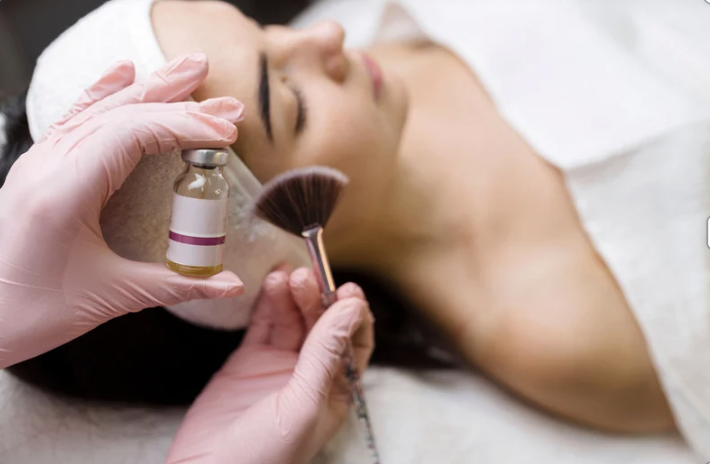
Professional Exosome Facials
When you come in for a professional exosome treatment, I can:
✅ Use medical-grade concentrations far higher than retail products
✅ Combine with microneedling for enhanced penetration and results
✅ Layer with complementary modalities (LED therapy, microcurrent, etc.)
✅ Customize to your specific concerns (aging, scarring, inflammation, etc.)
✅ Create treatment protocols for progressive, cumulative improvement
Best for: Dramatic results, addressing specific concerns, jump-starting regeneration
At-Home Exosome Serums
Professional-grade at-home exosome products allow you to:
✅ Maintain results between professional treatments
✅ Support daily regeneration with consistent application
✅ Extend the benefits of in-office treatments
✅ Address aging with nightly cellular support
Best for: Maintenance, prevention, ongoing skin health
My recommendation: Combine both, professional treatments for transformation, at-home serums for maintenance.
Who Should Use Exosomes?
Exosomes are beneficial for nearly everyone, but especially powerful for:
💫 Anti-aging concerns – Fine lines, wrinkles, loss of firmness
💫 Compromised skin barriers – Sensitivity, redness, reactivity
💫 Post-procedure healing – After lasers, peels, microneedling
💫 Scarring and hyperpigmentation – Acne scars, sun damage
💫 Chronic inflammation – Rosacea, eczema, irritation
💫 "Next-level" seekers – Those wanting beyond basic anti-aging
💫 Sensitive skin – Can't tolerate harsh actives like retinol
Not recommended for: Those with very active skin infections or open wounds (wait until healed first).
What to Expect: Realistic Timeline for Results
Immediate (1-7 days):
Improved hydration and plumping
Enhanced radiance and glow
Calmer, less reactive skin
Short-term (2-4 weeks):
Better skin texture
Reduced inflammation
Noticeable improvement in smoothness
Mid-term (6-8 weeks):
Visible reduction in fine lines
Improved firmness and elasticity
Enhanced skin barrier function
Long-term (12+ weeks):
Significant wrinkle reduction
Measurable improvement in skin quality
Continued regeneration with consistent use
Cumulative benefits that build over time
Important: Exosomes create real, biological change—not just surface effects. This takes time. Be patient and consistent.
Exosomes + Other Treatments: The Synergy Effect
Exosomes amplify the results of other anti-aging modalities:
Exosomes + Nanoneedling → Enhanced penetration and accelerated healing
Exosomes + PDRN → Dual regenerative pathways for maximum collagen stimulation
Exosomes + LED Therapy → Reduced inflammation, enhanced cellular energy
Exosomes + Chemical Peels → Faster recovery, better results
Exosomes + Retinol → Complementary mechanisms for comprehensive anti-aging
This is why I incorporate exosomes into my elite facial protocols... they make everything else work better.
The Investment: Are Exosomes Worth It?
Let's be honest: Real exosomes are not cheap.
The sourcing, processing, stabilization, and formulation of clinical-grade umbilical cord-derived exosomes is expensive. If you see "exosome serums" for $30, they're either heavily diluted or not real exosomes.
Professional treatments: $200-500+ per session (depending on protocol and modality combination)
At-home serums: $150-400+ for quality formulations from what I have found
Is it worth it?
If you've plateaued with conventional anti-aging and want true cellular regeneration... yes.
If you're looking for a cheap quick fix... no.
Think of exosomes as an investment in long-term skin health, not a one-time splurge. The results compound over time.
How I Use Exosomes in My Practice
As someone committed to science-backed, results-driven skincare, I've carefully integrated exosomes into my treatment menu:
Elite Anti-Aging Protocol – Combining exosomes with PDRN, peptides, and LED and infusing them into the skin with nano infusion. Book the Elite Nano Glow Infusion.
Upgrade option I have an upgraded option to add-on to any serivce provided to boost results
Common Questions About Exosomes
Q: Can exosomes cause irritation?
A: Quality exosomes I use are formulated for use even on freshly needled skin, so they're designed to be non-irritating. If irritation occurs, it's typically related to treatment technique (needle depth, pre-treatment products, numbing cream) rather than the exosome serum itself. My provider guarantees this as you can see in the article I reference and their statement on the topic.
Q: Are exosomes better than retinol?
A: They work differently. Retinol accelerates cell turnover. Exosomes trigger cellular regeneration at a deeper level. I often recommend using both for comprehensive anti-aging.
Q: How often should I get exosome treatments?
A: For active regeneration: Every 4-6 weeks for 3-4 sessions, then quarterly maintenance. For prevention: Quarterly treatments with at-home serum support.
Q: Can I use exosomes if I'm pregnant?
A: Consult your healthcare provider, but topical exosomes are generally considered safe. Injectable treatments should be avoided during pregnancy.
Q: Will results last?
A: Exosomes create real collagen production and cellular change, so results are lasting—but aging continues. Maintenance treatments and at-home use extend benefits.
The Future of Skincare Is Regenerative
For years, anti-aging skincare focused on:
Preventing damage (sunscreen, antioxidants)
Accelerating turnover (retinoids, acids)
Temporarily filling and plumping (hyaluronic acid)
Exosomes represent a paradigm shift: Regenerative skincare that actually changes how your cells function.
This is the future—and it's available now.
As someone with a Biology degree who has dedicated my career to understanding skin at the cellular level, I can confidently say: Exosomes are not hype. They're science.
But like any powerful technology, quality matters. Source matters. Formulation matters. Professional guidance matters.
Ready to Experience Exosome Technology?
If you're serious about taking your skin to the next level, beyond basic anti-aging and into true regeneration—exosomes might be exactly what you've been looking for.
✨ Book an Exosome Facial – Experience the technology in a professional treatment
✨ Shop Professional Exosome Products – Take the technology home for daily support
Book Your Exosome Treatment Here
Final Thoughts: Ingredients + Professional Care = Real Results
Want to Learn More?
For an in-depth, science-focused deep dive into exosomes, I highly recommend reading this comprehensive article from AO Medical (the professional line I trust):
Let's Talk About Exosomes - Exotran by Trandmi
This article addresses common concerns, explains the research, and breaks down exactly what makes quality exosome products different.
Want To Maintain Your Results at Home?
Shop facial massage tools and professional-grade serums that enhance your at-home routine:
Check Out All New Elite & Clinical Grade Skincare And Korean Skincare For Your Home Here


Your Holistic Esthetician & Skin Educator 🧬🌿
Helping women lift, firm, and glow through results-driven facials, holistic skincare tips and business tools. 🌹
Lindsay Rose Beauty
"You're altogether beautiful, my darling." – SOS 4:7
Ready for glowing skin? Book your facial at Lindsay Rose Beauty today or order your home care for fantastic results!
Follow me on
Instagram | Facebook | Pinterest
© 2025 Lindsay Rose Beauty | All Rights Reserved